WHAT YOU CAN DO: Sign the petition; spread the word; link to the online petition

Friday, November 13, 2009

The Prince of Wales celebrates 100 years of the 'Royal' Canadian Navy

The Prince of Wales and The Duchess of Cornwall visited Canadian Forces Base Esquimalt, the Headquarters of the Canadian Pacific Fleet, in Victoria, British Columbia 9 November 2009 to mark the upcoming centennial of the Canadian Navy (1910-2010). Readers will know this is very dear to me, the navy there being my former occupation and home port. If you listen closely, he actually called it the Royal Canadian Navy.


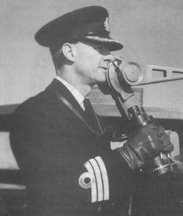
His Royal Highness wore the uniform of a Canadian Vice-Admiral, which unlike its older equivalent in the Royal Navy, sadly lacks two rings of gold lace above the thick admiral braid, a fourth row of nautical buttons and the all-familiar Elliot's Eye. (It is worthy to note that almost all of the seagoing nations of the world wear the Elliot's Eye, except France, Canada and the United States).

The Prince told the guests about his time in the British Navy and how on a number of operations he served alongside Canadian sailors, including on his way back from a posting in the West Indies where he and the crew of his vessel received a warm welcome in Halifax.

During the event, dignitaries watched as one of the naval base's more prominent warships, HMCS Winnipeg, sailed past with all its crew stood on deck.

Saturday, January 5, 2008

Restore our Naval Traditions

A Naval Ensign for Canada and a Royal Prefix for Her Navy


St. George's Ensign has been an integral part of the Canadian naval landscape ever since John Cabot landed at Newfoundland in 1497.

The petition to restore the 'Royal' designation to the Canadian navy and Canadian air force in time for the naval centennial (1910-2010) has now surpassed three thousand signatures! It is one thing to receive 3,000 unique visitors to a blog, which entails all of 3,000 clicks of the mouse button; it is quite another thing to get 3,000 people to fill out a petition form and leave behind comments. In addition to the signatures, the petition has literally received hundreds of onsite comments full of impassioned pleas to make it happen. Reading each and every one of them warms the cockles, along with the emails expressing encouragement to repair Paul Hellyer's mess that was inflicted on the R.C.N. and R.C.A.F. in 1968, when he was national defence minister. One Hellyer of a mess, indeed.

gb~weThe old White Ensign of the Royal Canadian Navy. The Canadian Navy has been without an official ensign since 1965.

Meanwhile, in an encouraging heraldic development pertaining to the de-Britished and un-Royaled Indian Navy, Andrew Cusack writes: "St. George Guards India's Fleet Once More. In a return to tradition, the old Indian naval ensign is reinstated".

indiageorge4Indian Navy Motto: "May the Lord of the Oceans be auspicious unto us"

070905-N-1730J-163

US Navy photo taken by MC3 Jason A. Johnston "1730J"

INDIAN OCEAN (Sept. 5, 2007) - St. George's Ensign snaps from the mast of Destroyer INS Ranjit, as it takes position during Malabar 2007, an exercise involving Kitty Hawk and Nimitz Carrier Strike Group and ships of the navies of Australia, India, Japan, and the Republic of Singapore. The Indian Navy is the 5th largest blue-water navy in the world.

indiageorge5CANA0008
Former Ensign of the Indian Navy and the Canadian Forces Naval Jack

In 2001, the Indian Navy experimentally adopted the deplorable Canadian innovation of placing the national flag in the canton and a stylized anchor in the fly, which other than preserving the white background, completely departed from the Anglo tradition of establishing a national variant of St George's Ensign (see below).

600px-Naval_Ensign_of_Jamaica.svg600px-Naval_Ensign_of_the_Bahamas.svgBRBD0007indiageorge4tt-naven

The navies of Jamaica, Bahamas, Barbados, India & Trinidad. Notice any pattern?

au^whitenz~naval

The Australian and New Zealand navies meanwhile, chose to preserve the Union Jack in the canton but dispense with St. George's Cross, in order to better distinguish themselves from the R.N. at sea, while staying true to their national identities.

CANA0008But back to the abominable Canadian variant, which is not even considered the official naval ensign of the Canadian navy, but the Canadian Forces Naval Jack (i.e., worn at the bow when alongside only). That's because Canada doesn't officially have a navy any more, only a "Maritime Command" of the Canadian Armed Forces.

canne3Why not ditch the anchor, bring back St. George and call it the "Royal Canadian Navy Ensign". Once we reinstitute the Royal prefix to the Canadian navy that is. (Suggested design by Andrew Cusack)

canne2Better yet, deface the ensign with the shield of Canada. Now we're getting somewhere. (Suggested design by Andrew Cusack)

canne1No doubt this is too much to chew politically, but if you really want to get bold, replace the Canadian flag with the Union Jack. (Suggested design by Andrew Cusack)

800px-Canadian_Blue_Ensign.svgAnd if you do all of that, well, you might as well also reinstate the old Jack of the Royal Canadian Navy.

Thursday, December 27, 2007

Walter Hose, Father and Saviour of the RCN

Walter Hose, Father of the RCN
By Dr. Wilf Lund, Naval Historian

Rear Admiral Walter Hose is the man credited with saving the Canadian navy. During his watch as Director of the Naval Service (DNS), then as Chief of Naval Staff (CNS), 1921-1934, Hose fought many battles to ensure the survival of the fledgling RCN, in his words "the Ugly Duckling" of Canadian National Defence.

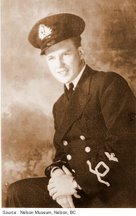
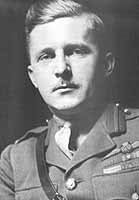
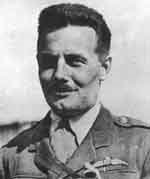
Rear Admiral Walter HoseWalter Hose was quite literally "a man of the sea". Born 2 October 1875 aboard the P&O steamer Surat in the Indian Ocean, Hose, whose father was an Anglican bishop, enrolled in the Royal Navy, like many sons of clergymen. At 14, he joined HMS Britannia and spent most of the next 21 years at sea.

His experience was extensive. He had six commands, including gunboats in Newfoundland and the China and East Indies Stations, and a torpedo gunboat in the Home Fleet. He also trained Royal Navy Reservists in Newfoundland from 1902-05. It was during his time in Newfoundland that he became acquainted with Captain Charles Kingsmill, the man he was ultimately to replace as Director of the Naval Service.

Promotion in the RN was slow and Hose, seeking new challenges, contacted Kingsmill in 1909 regarding opportunities in the proposed Canadian Naval Service. Kingsmill had nothing to offer but they kept in touch, and when the Commanding Officer of HMCS Rainbow resigned in 1911, Hose was offered the command. He accepted, and joined Rainbow as a Commander on loan from the RN. He was also in charge of the Esquimalt Dockyard.

Hose, who transferred to the RCN in 1912, worked hard to bring Rainbow up to standard for a cruiser of her class but watched as crew numbers fell until she had to be paid off in 1913 "with her belly flapping against her back-bone for want of personnel".

Hose believed that the only way to win public support for the RCN was to create a citizen navy, "a naval reserve with units across the country". In 1912, he advanced this idea to Kingsmill, whose response was, "My dear Hose, you don't understand - it can't be done".

A year later, during a visit to Victoria, the Minister of the Naval Service, Douglas Hazen, gave permission to a group of young men to form a naval volunteer unit and directed Hose to allow them to drill in the dockyard. Hazen also undertook to consult with his Cabinet colleagues on the idea of a naval reserve. Despite difficulty persuading Kingsmill of the merits of "Royal Canadian Naval Volunteers", Hose nevertheless pressed on, providing officers and senior ratings to conduct training for the volunteers. The support of BC's Premier Richard McBride, who was concerned about the lack of naval defence for his province, was obtained. The Governor General, the Duke of Connaught, also became interested, and Hose believed this support was critical. The Royal Naval Canadian Volunteer Reserve (RNCVR) was eventually established on 14 May 1914.

Within months, Canada was at war. The only ship on the west coast deemed theoretically capable of going on the offensive was HMCS Rainbow. Two antiquated old sloops, HMS Shearwater and Algerine, and two submarines recently acquired by the province of British Columbia, were also available to provide very minimal defence. Fortunately, the Canadian government had previously directed that Rainbow be dispatched on a sealing patrol and she was thus fit for sea, if not for war.

In early August, Rainbow was assigned to protect merchant shipping in the area. There was intelligence of a German cruiser squadron operating in the South Pacific and, more urgently, the possibility of two German cruisers operating off the coast of Mexico. The heavy burden of making Rainbow ready fell to Hose, who lacked both resources and support. He had no high-explosive shells onboard and only half the ship's required complement, a third of these being RNCVRs. Rainbow was dispatched on 2 August, to guard trade routes north of the Equator, with a warning that she might encounter the German cruiser Leipzig. She departed Esquimalt on 3 August; war was declared on 4 August. Rainbow became the first RCN ship ever to be at sea as a belligerent.

The first month of the war was one of great uncertainty on the west coast. There were rumours of imminent attack by German cruisers. Rainbow marched and counter marched between Cape Flattery and San Francisco. She escorted Shearwater and Algerine home after they were ordered to return to Esquimalt from missions in Mexican waters, and also scouted for the German cruisers. Unknown to Hose, the Leipzig was trying to locate and engage Rainbow. They never made contact but the "what ifs" have provided grist for the history mill ever since.

By the end of August, reinforcements in the form of the Japanese armoured cruiser Idzumo and modern RN light cruiser, HMS Newcastle, had arrived in Esquimalt. The German cruisers left northern waters to join German Admiral Maximilian von Spee off the South American coast, removing the threat from the North Pacific. Rainbow was assigned general patrolling duties that took Hose on one occasion as far south as Panama. He seized some German merchant ships as prizes. Rainbow also acted as a training ship for RNCVRs until paid off in May 1917.

Hose, now an Acting-Captain, was reappointed in August 1917, to Sydney, Nova Scotia as Captain of Patrols responsible for Anti-Submarine Warfare (ASW) operations in the St. Lawrence area. There was a growing threat from attack by long-range German U-boats and Hose had to significantly expand patrol activities, an immense task. He approached his new tasks with characteristic vigour, but Hose had had a long war and he broke down from exhaustion. In July 1918, he wrote to Kingsmill, "The Machinery needs a rest". But the anticipated U-boat attacks materialized and Hose went back to work. By the time the war ended in November 1918, Hose had learned a great deal about the challenges to be met if the RCN was to ever become a sustainable national service. His turn to meet those challenges would not be long in coming.

In March 1920, Captain Walter Hose was summoned from Halifax by the Minister of the Naval Service, the Honourable C.C. Ballantyne, and directed to immediately address the reorganization of the navy question. Hose had no experience in Ottawa and was literally thrown into the "deep end".

When Hose arrived at naval headquarters, he was assigned as the Assistant to the Naval Minister and Acting Director of the Naval Service, in fact head of the RCN. It is interesting to note that Hose could be considered a middle of the pack Commander in the Royal Navy when he transferred to the Canadian Naval Service "to do something useful" and because his RN promotion prospects looked bleak. That decision was a happy one for the RCN because Hose brought to the fledgling navy traits of optimism and endurance, plus a good dose of political acumen that carried him through stormy times. A more talented and ambitious person might well have given up on the navy and sought satisfaction elsewhere.

One of Hose's first tasks was to obtain ships for Canada's navy from the British Admiralty. He went to London and negotiated skillfully for a modern vessel, HMS Aurora, instead of the outmoded old coal-burner first offered (HMS Glasgow). Hose then pressed for the loan of gunnery and torpedo ratings to man Aurora. Despite fierce opposition from Britain's Second Sea Lord, Admiral Sir Montague Browning, Hose won the day.

To Hose the future looked promising. HMCS Aurora with Patrician and Patriot arrived in Halifax on Christmas Day 1920. The small squadron provided a foundation to build on, plus positions for graduates of the Royal Naval College of Canada. The naval appropriation - $2.5 million - was sufficient to man and operate the ships, and on New Year's Day 1922, Hose was confirmed as the Director of the Naval Service. This good fortune was short lived. Mackenzie King's Liberals defeated the Conservatives in the fall election of 1921. The Liberals had a natural inclination toward anti-militarism and needed no coaxing to slash the military budget.
Rumours circulated that the Naval Service was to be absorbed by the Militia (the newly created Canadian Air Force had already succumbed to this fate). In addition to meeting the basic challenge of finding money for the RCN's survival, Hose needed to ensure that the Navy contentcolumntained its independence.

The budgetary axe fell quickly; the RCN had its appropriation cut by 40 percent to $1.5 million dollars. This compelled Hose to reduce the fleet to Patriot and Patrician and four minesweeping trawlers. He closed the Naval College and Youth Training Establishment and cut personnel down to just over 400. Walter Hose fully appreciated that the RCN had no support in the government or the country; increased funding would come only with political support. It was necessary to create "a far greater sea-consciousness." Hose believed; "The navy must be brought into the country(...)." The only way to do this was to raise a naval volunteer reserve with units in populous cities throughout the Dominion.

From this vision the Royal Canadian Navy Volunteer Reserve (RCNVR) was established on 31 January 1923, with 1000 officers and men. Naval reserve divisions soon opened in fifteen cities across Canada, mostly with half companies of 50 personnel. According to historian Marc Milner, "the volunteer reserve companies were an instant success." Hose was in many ways replicating for the navy the model that had made the militia an institution of Canadian society. It worked very effectively and the base for rapid expansion was in place when war came.

For years Hose continued to be plagued by political infighting but was finally named Chief of the Naval Staff in 1928. Under his watch , HMCS Skeena and Saguenay, the first two warships built for the RCN, were obtained. The two destroyers were part of Hose's long-range plan for a small fleet to meet Canada's defence requirements.

Hose and the RCN were not home free yet, however. The depression forced massive cuts on the Department of National Defence. In May 1933, the Government called for a $3.7 million cut in the defence budget ($2 million of which was to be taken from the RCN). The recontentcolumning $422,000 was insufficient even to pay for the Navy's disbandment.

It was the clear objective of the Militia to abolish the Navy. The Chief of the General Staff, Major General Andrew McNaughton, had personally recommended this to Prime Minister Mackenzie King on the grounds that if the Government could not afford to contentcolumntain all three services efficiently, then the Navy should be done away with. Hose recalled, "Naturally I steadfastly opposed this, (...) and I was able to leave them with the final estimates I had submitted - intact." This was Hose's final battle. He requested to be permitted to retire and recommended that Commander Percy Nelles succeed him as Chief of the Naval Staff. Hose was promoted to Rear Admiral on the retired list in June 1934.

Rear Admiral Walter Hose probably saved the Royal Canadian Navy. His legacy was a small but vibrant, enthusiastic and highly professional regular force. Across Canada the divisions of the RCNVR wove the Navy into the fabric of Canadian society. Hose was at heart a tenacious fighter but also a political realist. Had it not been for Hose the RCN, the "Ugly Duckling of Canadian National Defence", may not have survived.

Friday, November 16, 2007

What happened during the 50th?

In 1960, the Royal Canadian Navy (RCN) celebrated its 50th Anniversary. Vice-Admiral Harry G. DeWolf, OBE, DSO, DSC, CD, was Chief of the Naval Staff, leading the RCN from his headquarters in Ottawa. He retired from the RCN on 31 July 1960 and Vice-Admiral Herbert S. Rayner, DSC, CD, succeeded him.

The navy was composed of Atlantic Command in Halifax, N.S., and Pacific Command in Esquimalt, B.C., and the Royal Canadian Navy (Reserve) [RCN(R)] located in 21 cities across the country. The RCN counted 19,926 officers, men and women and, in addition, there were 3,516 reservists and 13,000 civilian employees; the fleet tallied 120 vessels: 1 aircraft carrier, 24 destroyers, 18 frigates, 19 minors warships, 58 auxiliaries vessels, and more than 135 aircraft and helicopters of all types.

The celebrations took place in very short period of time on both coasts. The overall coordinator for the navy was Commander R.C. Hayden, Director of Naval Information. The main events for Atlantic Command occurred from 19 to 23 May 1960. On 19 May, a sail past of ships and a fly past of naval aircraft occurred at the Halifax waterfront. The following day, a Fleet Regatta in Bedford Basin and a Sunset Ceremony within the ramparts of Citadel Hill were performed. In the evening, an Anniversary Ball was held in the HMCS STADACONA gymnasium. 21 May was Navy Day and ships were open to the public; the last event was the consecration of the new Queen’s Colour on 23 May.

In the Pacific Command, the celebrations began with the consecration of the Queen’s Colour and a Golden Jubilee Dinner at Royal Roads on 4 May 1960. The Minister of National Defence, Major General, The Honourable George R. Pearkes, VC, PC, CC, CB, DSO, MC, CD and the Chief of Naval Staff attended both events. On 20 May, a Jubilee Ball took place in the HMCS NADEN gymnasium. The next day, the ships and establishments were opened to the public and, in the evening, the destroyers berthed in Victoria Inner Harbour turned on their backbone lighting. The navy participated in the Victoria Day Parade by providing a large marching contingent and five floats on 23 May. The last significant event was the Sunset Ceremony of 26 May in front of the Legislative Assembly Building in Victoria.

Both coastal command and the Naval Reserve marked the 50th Anniversary during the celebrations for the Battle of the Atlantic on Sunday 08 May 1960. A second pan-Canadian event was the utilization of special rubber stamps in all main post offices to cancel stamps from late April to June of the year. The stamps were French or English in accordance with the post office location. Another small occurrence was the presentation of naval ensigns to churches across the country. Many radio and television programs about the navy were aired at the national level during the year and many major Canadian newspapers published special supplements during the first half of May.

Traditional sunset ceremonies were conducted by a detachment from Atlantic Command composed of Guard of 80 members, complete with naval 12-pounder guns, and 50 men band. The demonstrations took place from 30 June to 07 July 1960 in Ottawa, Toronto, Montreal and Quebec City.

The Divisions of the RCN(R) organized a myriad of local events; many of them organized balls, open houses, and participated in local events and radio interviews during the summer months. HMCS CARLETON supported the Canadian War Museum for an exhibition on the RCN. In May and June, the destroyers HMCS COLUMBIA and CHAUDIERE visited cities where Divisions were located on the St.Lawrence and Great Lakes in support of the anniversary.

The celebrations concluded by a 50th Anniversary Ball at the Chateau Laurier Hotel, in Ottawa, attended by the Governor General, His Excellency The Right Honourable Georges-Philias Vanier, PC, DSO, MC & Bar, CD, and his wife, on 20 October 1960. A naval band provided the music and the room was decorated with models of aircrafts and ships and banners. The last chapter of the celebrations was the presentation to their respective Commands by the province of Nova Scotia and British Columbia of Sterling Silver Drums marked with the badge of the RCN and the Coats of Arms of Canada.

Tuesday, October 9, 2007

The Royal Canadian Air Farce drops the 'Royal Canadian' to become just a Farce

THE CANADIAN COMEDY TROUPE that's been on the air off the air since 1973, has apparently decided to drop the 'Royal Canadian' from its corporate identity and go with just Air Farce Live. I have only three things to say about this turn of events:

First, they never had a royal charter to begin with, so it's not an insult to the Crown; second, Royal Canadian Air Force veterans will probably not be disappointed to see this play on words disappear, since intended or not they could not have appreciated the indirect insult this reflected on the proud record of the RCAF; and thirdly, despite the show's past popularity, they now no doubt believe they have a branding problem, when in fact the show's attempt at political and cultural satire has descended into rank mediocrity and with few exceptions is no longer funny. Methinks they are in a state of denial.

Still, for a nation that is becoming less and less cognisant of its status as a constitutional realm, the Royal Canadian Air Farce at least reminded us that this was so. The Crown exists, but it unfortunately does so outside the popular imagination.

Saturday, August 18, 2007

Mr. Veteran Signs the Petition!

Well well, what do we have here. Take a good look at signature number 1944 - that would be the Clifford Chadderton, veteran of veterans according to veterans, the Chairman of the National Council of Veteran Associations in Canada!

As my petition co-lead writes: "Is it just a coincidence that his number on the petition is '1944', the year that he lost his leg in the Battle of the Scheldt?!!!" Boy, what a huge boost to the petition. And what an honour. Thanks, Cliff!

Thursday, June 14, 2007

Her Majesty's Navies

The Royal New Zealand Navy still refers to her brethren navies as the Royal Navy, Royal Canadian Navy, Royal Australian Navy and the United States Navy. Thankfully, she did not get the memo from 1968 Canada. Let us hope she never does.

Hat tip: Ken MacNeil

Wednesday, June 13, 2007

Richard Herbert Bray Carruthers-Zurowski writes:

Signature #1478 said...Many thanks for this [petition]. It is an excellent cause and one very dear to my heart. My parents both served King, Dominion, and Empire in World War II: my late father in the R.C.A.F., and my mother, now 81, in the W.R.C.N.S. Indeed, on my mother's side, my naval link goes back in Canada to the Royal Navy. My earliest forebears in Canada arrived in British North America from England in the senior service. My maternal grandmother's maternal grandfather, William Bray, J.P., R.N., (1814-1882), was a gunnery officer who arrived with the Royal Navy fleet despatched from Portsmouth to help put down the unpopular Upper Canada rebellion. Indeed, his full-page obituary in the "Petrolea Advertiser", the newspaper of the first place where petroleum was found in North America, now called Petrolia [sic], Ontario, includes information that his old naval friend Capt. Blaine related detailing the fact that my great-great grandfather volunteered for service on the Great Lakes and at one crucial point served aboard the seconded steamship "Traveller".

Sitting off what is now Prescott, Ontario, opposite the enemy's munitions store, the stone windmill, at what is now designated The Battle of the Windmill, where the last rebels were gathered with their powder, etc., William Bray, aged 22, fired the salvo into the enemy weapons dump and blew it to smithereens, which put paid to the rebels' last stand and effectively ended the Upper Canada rebellion.

The War of 1812 has its heroes including HRH The Duchess of Cornwall's forebear, Sir Allan Napier MacNab, Bt, later Prime Minister of the United Canadas before Confederation, while those of the Upper Canada rebellion include, I suppose, my largely unsung Royal Navy forebear William Bray.

Bray was later put in charge of the naval storehouse at Kingston on Lake Ontario, where his commanding officer, Capt. (later Admiral Sir) Williams Sandom, had him arrested for pecculation from the stores. Bray sued for false arrest and a young Upper Canadian barrister, John Alexander Macdonald, of Kingston, defended him by championing the supremacy of the English Common Law over Royal Navy rules and regulations. The man who was later to become the Dominion of Canada's first PM, Sir John A. Macdonald, won my ancestor £50 in damages and a completely clean record. Bray left the Royal Navy and elected to stay on in Upper Canada where he was married in 1839 at St George's Kingston (now the Cathedral of the Anglican diocese of Ontario) to Eliza Jane, younger daughter of John Lang (1790-1855), late of HM Dockyard Plymouth, and of Point Frederick, the Royal Navy Dockyard at Kingston, U.C. (Lang later served as Timber Master to the Rt Hon. Stephen Moore, 3rd Earl of Mount Cashel, colonial emigration promoter, in his project to log off Amherst Island in Lake Ontario). The young couple were married by the Rev. George Okill Stuart, Archdeacon of Kingston, son of the first Anglican missionary in Upper Canada, the Rev. Dr John Stuart, U.E., first rector of St George's, Kingston, another ancestor of HRH The Duchess of Cornwall, who arrived from Pennsylvania as a United Empire Loyalist.

Bray went on to a career as a chemist and druggist in Adelaide, Upper Canada/Canada West, and Petrolea, Ontario, and served as a lay representative of the United Church of England and Ireland parish of St Ann, Adelaide, near London, Ontario, in the first Anglican synod in the British Empire. His eldest son, Dr John Lang Bray, became president of the Canadian Medical Association in the 1890s, and his younger brother Tom Cox Bray's younger son, Sir John Cox Bray, K.C.M.G., of the antipodean Adelaide, as first native-born premier of South Australia, and later Agent General of that province in London (see "Burke's Colonial Gentry", vol. 2, p. 222, under 'Bray of Adelaide'). William Bray's penultimate son, the Rev. Horace Edgar Bray (1859-1943)(see "Burke's Landed Gentry", 1937 edition, 1939 supplement, under 'Bray'), rector of St John's, Port Rowan, Ontario, and graduate of Huron College, London, Ontario, married my mother's parents (the bride being his niece) in 1910, the same year that the Royal Canadian Navy came into existence. Uncle Horace's wife was Alice Maud Kingsmill, a kinswoman of Admiral Sir Charles Edmund Kingsmill, the man who presided as senior officer over the R.C.N. from 1910-1921 (See http://en.wikipedia.org/wiki/Charles_Kingsmill). Horace and Alice's younger son was Horace Edgar Kingsmill "Rex" Bray (1896-1918), a young Canadian who served in the Royal Flying Corps, and is buried in Shotwick St Michael churchyard in Cheshire under the epitaph, "A Canadian soldier-poet who followed the gleam". My family's connexion with the Navy, both Royal and Royal Canadian, stretches back at least to the early 19th century in Canada and the United Kingdom, and in the career of my mother and her English-born forebear includes the fight against Hitlerian tyranny in the 20th century and Ottoman despotism in the 19th (as William Bray ran away to sea at 13 and served as a cabin boy at the Battle of Navarino when Greece, with British help, got its independence from the Turks in 1827). While the RFC and RCAF are very much the junior service, air power has served the cause of British and Canadian freedoms in two world wars and beyond, and I hope that this petition, to borrow from my poet hero cousin's grave, allows the Canadian services, the Royal Canadian Navy and Royal Canadian Air Force to 'gleam' once again under the honoured and honourable designation granted to both services as a signal mark of distinction in service by Canadian and British Empire and Commonwealth Sovereigns past and present. Vivat Regina! Long may Canada and the Commonwealth remember the freedoms we have fought to maintain and extend under our royal Commander-in-Chief, whose services well-deserve to enjoy again the Monarch's supreme accolade, Royal.

Friday, June 8, 2007

Les Canadiens Royaux

Royal Canadians Revised

Sunday, June 3, 2007

1,000 Signatures!!!

It appears that this petition has legs with over 1,000 signatures in little more than two weeks. Judging by the hundreds of comments written by veterans and their families, the pent-up longing for such a petition is amply evident. A running theme in the comments is that concerted effort for such a course of action is much overdue and one wonders why it has taken 40 years to bring this matter to Parliament's attention. A sense of hopelessness I suspect, which is understandable when you think that so few of our politicians have a background in military service. Apparently only 16 of the current 308 MPs or 5% in Ottawa have ever served in the regular or reserve forces, which is probably high compared to previous sittings of parliament. In any event, it's early goings in this campaign. Let's continue getting the word out!!

Wednesday, May 30, 2007

Signature #751, Marty Burke writes:

I am an active member of the federal Conservative Party. At our 2005 policy conference my defence policy resolution made it to the floor. It included the return of the RCN/RCAF titles of the element commands. It was defeated with the help of the current MND. Good luck though!


It would be useful to know what else was in the policy resolution, and whether it was the RCN and RCAF titles that did it in. But I was not aware that such a resolution ever came forward. No matter. Onwards and upwards!

Monday, May 28, 2007

500 signatures!

On May 27, the petitioners reached the 500 mark. A thank you to each and every one of our growing supporters - we enjoy reading all the comments and all the emails and are strengthened in our determination through your words of support. Please continue spreading the word: The more of a groundswell we can create, the more likely the petition will capture the attention of the powers-at-be.

Forward the RCN and RCAF!

Friday, May 25, 2007

Our Heritage. Their Tradition. Our Pride


Sign the Petition. Spread the Word. Link to the Site.

Tuesday, May 22, 2007

Gregory Benton writes:

As Admiral Cunningham said whilst considering the option of evacuating Crete, 'it takes three years to build a ship; it takes three centuries to build a tradition'.

For too many among the Maple Dominion's history-deprived population, tradition is like yesterday's porridge: it takes about twenty-four hours to pass.

To paraphrase Grandad, 'it's easy to tear it down in a minute; it's the building of it that takes time'. Of course, that was over a Meccano set. The thought, sensibility, care and layers of experience that go into the establishing of an institution require more than boiling water. Indeed, the cultural, military, and constitutional institutions that are the foundation of this country, inherited from Britain, permit us the privilege to know the flavour of a centuries-old inheritance.

The armed forces of a country require somewhat more serious consideration of their composition and durability and, in Canada's case, the political wrecking ball applied to the Royal Canadian Navy, Canadian Army and Royal Canadian Air Force by the militarily-challenged scoundrels in the 1960's, is a perfect example of the self-inflicted wound to a nation's soul.

Of course, as history has revealed, the dismantling of the armed services of Canada, that only twenty years before their execution had acquitted themselves so nobly in the theatres of the Atlantic, Britain, France, Italy, Africa, Hong Kong, Germany and the liberation of the Netherlands, was merely a part of the larger operation of a 'soul transplant' for the whole country. Instead of what most countries do, i.e., build on it's past, treasuring it's identity and deeds, Pierre Trudeau, that great intellectual who chose to stay home and play while most of his generation were facing the most ominous challenge of the century, saw Canada as his own canvas on which he would paint a new country. It was the abstract school of his mind from which he envisioned the landscape and so his disciples went forth among the people and the people, verily, were mesmerised by it all.

As much as they tried, and as successful as they were in the operation, there remains in the country something of the spirit and devotion that once shone brightly in the Dominion. It would seem that remnants of the culture that was loyal to its heritage and interests have survived in some places. From the failing hands of old warriors to a younger generation of Canadians thirsty for their rightful legacy, a spirit continues to grow that seeks to restore at least some of what has been lost. There have been some incremental, perhaps subtle demonstrations of this.

Certainly, with the recent re-building of the Canadian Forces and the support they have been given materially and personally, have revived the feelings that have lingered quietly among those who have and continue to serve their country with distinction, courage and pride.

In spite of it all, the nay-sayers could not snuff out the indomitable spirit of the Canadian warrior.

So it is with a number of young Canadians, serving in the Canadian Forces or initimately allied with the families of our sailors, soldiers and airpeople, who are seeking the restoration of the prefix 'Royal' for the Navy and Air Force within the unified Canadian Forces.

While it is simply a change in 'style' rather than of an overhaul of the structure of the military, it is a symbolic gesture that would permit the country, and especially the forces themselves, the dignity of identifying with the tradition from which they are derived in the course of the development of a nation that found much of its greatness attached to those who served as 'Royal' Canadians in their generation.

It would be a significant gesture for parliament to respond positively to this request; so that what once was lost can be found and treasured again.

Whoever you are, or wherever you reside, I invite you to support
this symbolic cause that affirms the heritage of Canada's fighting forces.

Watch and hear the RCN-RCAF animation

Monday, May 21, 2007

A timely request

By Matt Bondy, Columnist with the Guelph Mercury

As you all know, it is Victoria Day here in Canada; the day we set aside in honour of Queen Victoria and observe as the official birthday of the reigning sovereign, Elizabeth the Second.

In keeping with this celebration of Royal Heritage, I would ask that the DP's readers strongly consider signing the petition (find a permanent link to the left of this page under the HM Forces section) to restore Royal designation to Canada's Navy and Air Force.

Canada's Navy was referred to as the Royal Canadian Navy - and the Air Force as the Royal Canadian Air Force - until in 1968 the Pearson-led Liberal government devised their brilliant scheme to 'unify' the Canadian Forces into one interoperable force. They stripped the Navy and Air force of their traditional jacks and ensigns, and also of their traditional uniforms. (Not to mention, the army was told it had to begin saluting as the yanks do, with palm facing the ground, instead of how they had always done, with palm facing the object of the salute. Took me several pushups to figure this out during basic training.) Since that time, and under the Mulroney and Chretien governments, Canada has been slowly restoring what was best about the old system. The Navy and Air Force have recuperated some of their traditions and styles of dress, and both of these components, as well as the army, have distinct representation in Ottawa once more.

The recuperation of Royal designation to the Navy and Air Force are natural steps toward finding the equilibrium between modernisation and tradition. As anyone who has ever served in the armed services will tell you, Regiment is everything. The army was spared the worst of Pearson's wrath, in that army units kept their regimental formation (for example, I was an infantryman with the Essex and Kent Scottish Regiment). But in the Air Force and Navy, personnel move around quite a lot, and their main point of mutual identification was with the Navy or Air Force as a whole. It was devestating to the servicemen in these branches when their traditions were gutted, and remains a major bone of contention among serving personnel.

What this petition asks is nothing more than simply revising whatever statutes are necessary to return the Navy and Air Force to their earlier titles as the RCN and RCAF respectively. This would require absolutely ZERO compromise of the progress made toward interoperability in the Canadian Forces, but would only restore to these two branches some of their tradition, their visible character, and would raise the profile of the Canadian Forces in the national consciousness. This, after decades of defence recklessness, is the least we can do for our men and women in uniform.

The lead petitioners have already secured some parliamentary support for this initiative, and I am confident that more is on the way.

So on this day that is dedicated to our Royal heritage, I ask you from the bottom of my heart to consider signing this petition. The object is to have collected several hundred, if not thousands of signatures by 2010, at which time Canada's Navy will celebrate its 100th Anniversary.

250 signatures in three days!

A good start without so much as breaking a sweat to promote the petition. Apreciation goes to the following forums:

CF Pilots Forum
Cadet World Forum
MilNet Forum
Monarchist League Forum
Free Dominion Forum.


Remember: Sign the petition; spread the word; link to the online petition

Thursday, May 17, 2007

Sign the Petition today!

We, the undersigned veterans, citizens and residents of Canada, and loyal subjects of Her Majesty the Queen of Canada, call upon Parliament to take whatever action is necessary to officially resume, restore and reinstate usage of such Royal designations in time for the 2010 centennial celebrations of the Canadian navy, such that the Canadian navy is styled or reincorporated as the Royal Canadian Navy and its abbreviated expression RCN, and the Canadian air force is styled or reincorporated as the Royal Canadian Air Force and its abbreviated expression RCAF, and such styling or reincorporation is made retroactive to February 1, 1968.

Spread the word; tell all your friends and family. Sign the online petition now!

Bilingual Petition Goes Live!

À LA CHAMBRE DES COMMUNES AU PARLEMENT RASSEMBLÉ

Nous, les vétérans sous-signés, les citoyens et les résidants du Canada, et les sujets fidèles de Sa Majesté la Reine du Canada, dessinons l'attention de la Chambre à ce qui suit :

CONSIDÉRANT QUE l'acte Naval de Service a reçu le consentement royal sur mai 4, 1910, et la marine canadienne commémorera et célébrera son centennal en 2010;

ET TANDIS QUE la Marine canadienne royale (MCR) était la marine du Canada jusqu'en 1968 où les trois forces armées canadiens ont été unifiés pour former les Forces canadiennes, et la marine canadienne moderne a été connu en tant que commande Maritime de Forces de canadien depuis l'unification, mais se rapporte toujours pas officiellement en tant que "marine" et maintient beaucoup de traditions de MCR;

ET TANDIS QUE le Commande-dans-Chef des Forces canadiennes est investi dans le monarque et les bateaux canadiens des Forces canadiennes continuez à s'appeler "le Navire canadien de Sa Majesté ";

ET TANDIS QU'IL est actuellement inexact d'employer l'expression "Marine canadienne royale" et son abréviation "MCR" dans les références à la Marine canadienne après février 1, 1968;

ET TANDIS QUE la désignation royale de la Marine canadienne a été exécutée par une proclamation royale qui n'a été jamais retirée, et celui le gouvernement canadien et les Forces canadiennes sont exigés pour reprendre l'utilisation de l'expression "Marine canadienne royale", si l'expression "Marine canadienne" est employée dans n'importe quelle capacité officielle;

ET TANDIS QUE ce qui précède concerne également "la Force aèrienne canadienne royale" et son abréviation la "FACR" dans les références à l'armée de l'air canadienne après l'unification, qui a été connue pendant que les Forces canadiennes aèrent la Commande depuis février 1, 1968, mais se rapporte toujours pas officiellement comme "la Force aèrienne" et maintient beaucoup de traditions du force "FACR";

ET TANDIS QUE malgré l'acte de la Défense Nationale, qui déclare que "les Forces canadiennes sont les forces armées de Sa Majesté augmentée par le Canada et se composent d'un service appelé les Forces armées canadiennes", des uniformes séparés de service ont été réintroduits en 1986, les chefs séparés de service ont été rétablis et sont revenus aux sièges sociaux de la Défense Nationale en 1997, des sites Web séparés de service ont été officiellement établis et les références aux services séparés sont maintenant banalité dans toutes de plus en plus les Forces canadiennes de tri-service, qui ont été adaptées en dehors de quelque façon compromettant la structure unifiée de commande, la nature intégrée ou l'unité de corporation des Forces canadiennes;

ET TANDIS QUE reprenant l'utilisation de la désignation royale car elle concerne "la Marine canadienne" et "la Force aèrienne canadienne" pourrait être facilitée en dehors de quelque façon minant l'unité des Forces canadiennes agissant en tant qu'une organisation simple sous une structure unifiée de commande, et en dehors de quelque façon compromettant l'intégration des opérations, de l'appui de logistique, du personnel militaire et de l'administration des services séparés agissant ensemble sous le système fonctionnel courant de commande, qui était l'intention de la facture C-243, l'acte de Réorganisation de la Force canadienne, que nous les pétitionnaires soutenons fortement;

ET TANDIS QUE la reprise de l'utilisation de telles désignations royales pourrait être facilitée en dehors de quelque façon remplaçant les Force canadiennes la Commande Maritime et les Forces canadiennes Aèrent la Commande, dont les chefs du personnel continueraient à exercer la commande nominale au-dessus de la Marine et de la Force aérienne respectivement;

ET TANDIS QUE la reprise de l'utilisation de telles désignations royales pourrait être efficacement accomplie et exécutée sans coût matériel aux contribuables canadiens;

ET TANDIS QUE la reprise de l'utilisation de telles désignations royales reconstituerait esprit de corps traditionnel de la Marine et la Force aérienne, juste comme l'utilisation continue de la désignation royale des régiments réguliers de longue date de force et de réservation a préservé esprit de corps traditionnel de l'armée, et juste comme l'utilisation continue de la désignation royale de la Gendarmerie royale du Canada de longue date a préservé esprit de corps traditionnel de la police fédérale du Canada;

MAINTENANT DONC, nous les vétérans de soussigné, les citoyens et les habitants de Canada, et les sujets loyaux de Sa Majesté la Reine du Canada, l'appel sur le Parlement pour prendre quoi que l'action est nécessaire officiellement de reprendre, restaurer et réintégrer l'usage de telles désignations royales à temps pour les 2010 celébrations séculaires de la Marine canadienne, tel que la Marine canadienne est conçue ou est réincorporé comme la Marine canadienne royale et son MCR d'expression abrégé, et la Force aérienne canadienne est conçue ou est réincorporé comme la Force aérienne canadienne royale et son FACR d'expression abrégé, et tel concevoir ou la réincorporation est faite rétroactif au 1 février, 1968.

Friday, May 11, 2007

TO THE HOUSE OF COMMONS IN PARLIAMENT ASSEMBLED

We, the undersigned veterans, citizens and residents of Canada, and loyal subjects of Her Majesty the Queen of Canada, draw the attention of the House to the following:

WHEREAS the Naval Service Act received Royal Assent on May 4, 1910, and the Canadian navy will commemorate and celebrate its centennial in 2010;

AND WHEREAS the Royal Canadian Navy (RCN) was the navy of Canada until 1968 when the three Canadian armed services were unified to form the Canadian Forces, and the modern Canadian navy has been known as Canadian Forces Maritime Command since unification, but still refers to itself unofficially as the "navy" and maintains many RCN traditions;

AND WHEREAS Command-in-Chief of the Canadian Forces is vested in the Canadian Monarch and ships of the Canadian Forces continue to be called "Her/His Majesty's Canadian Ship";

AND WHEREAS it is currently improper to use the expression "Royal Canadian Navy" and its abbreviation "RCN" in references to the Canadian navy after February 1, 1968;

AND WHEREAS the Royal designation of the Canadian Navy was executed by a Royal Proclamation which has never been revoked, and that the Canadian Government and the Canadian Forces are required to resume usage of the expression “Royal Canadian Navy”, if the expression “Canadian Navy” is used in any official capacity;

AND WHEREAS the above also pertains to the "Royal Canadian Air Force" and its abbreviation "RCAF" in references to the Canadian air force after unification, which has been known as Canadian Forces Air Command since February 1, 1968, but still refers to itself unofficially as the "air force" and maintains many RCAF traditions;

AND WHEREAS notwithstanding the National Defence Act, which states that "The Canadian Forces are the armed forces of Her Majesty raised by Canada and consist of one Service called the Canadian Armed Forces", separate service uniforms were reintroduced in 1986, separate service chiefs were reinstated and returned to National Defence Headquarters in 1997, separate service websites were officially established and references to the separate services are now commonplace throughout the increasingly tri-service Canadian Forces, all of which have been accommodated without in any way compromising the unified command structure, integrated nature or corporate unity of the Canadian Forces;

AND WHEREAS resuming usage of the Royal designation as it pertains to the "Canadian Navy" and "Canadian Air Force" could be facilitated without in any way undermining the unity of the Canadian Forces acting as a single organization under a unified command structure, and without in any way compromising the integration of military operations, logistics support, personnel and administration of the separate services acting together under the current functional command system, which was the intent of Bill C-243, The Canadian Forces Reorganization Act, which we the petitioners strongly support;

AND WHEREAS resuming usage of such Royal designations could be facilitated without in any way replacing Canadian Forces Maritime Command and Canadian Forces Air Command, whose Chiefs of Staff would continue to exercise nominal command over the navy and air force respectively;

AND WHEREAS resuming usage of such Royal designations could be efficiently accomplished and executed without material cost to Canadian taxpayers;

AND WHEREAS resuming usage of such Royal designations would restore the traditional esprit de corps of the navy and air force, just as continued usage of the Royal designation of longstanding regular force and reserve regiments has preserved the traditional esprit de corps of the army, and just as continued usage of the Royal designation of the longstanding Royal Canadian Mounted Police has preserved the traditional esprit de corps of Canada's federal constabulary force;

NOW THEREFORE, your petitioners call upon Parliament to take whatever action is necessary to officially resume, restore and reinstate usage of such Royal designations in time for the 2010 centennial celebrations of the Canadian navy, such that the Canadian navy is styled or reincorporated as the Royal Canadian Navy and its abbreviated expression RCN, and the Canadian air force is styled or reincorporated as the Royal Canadian Air Force and its abbreviated expression RCAF, and such styling or reincorporation is made retroactive to February 1, 1968.

SIGN THE PETITION TODAY!

Thursday, May 10, 2007

Letter from the Library of Parliament

2 May 2007

Mr. Laurie Hawn, M.P.
Room 400
Justice Building
House of Commons
Ottawa


Dear Mr. Hawn:

Further to the request from Jane Houser of your office on 1 May 2007, I am pleased to provide the following information regarding the reinstatement of the “Royal” designation for the Navy and Air Force.

Following a review of the relevant legislation and further to conversations with representatives of the Department of National Defence and the Department of Canadian Heritage, explicit approval from the Queen, by way of proclamation, would be needed to reinstate the Royal designation for the Navy and Air Force. In addition, amendments to the Queen’s Regulations and Orders, the military’s regulatory framework, as well as changes to those sections of the National Defence Act R.S.C. 1985, c. N-5, that refer to the Canadian Forces, such as section 14, would also be required to reinstate the Royal designation. Moreover, reinstating the Royal designation would involve amending numerous other statutes that make reference to the Canadian Forces. A search of the Consolidated Statutes of Canada at the Department of Justice Web site indicates that there are 67 such Acts that could require amendment.

I hope that this information is useful for your purposes. If you have any questions, or require further information, please do not hesitate to contact me.

Yours very truly,


James R. Robertson, Acting Director
Law and Government Division
Parliamentary Information
and Research Service

JRR/cg

Correspondence with Laurie Hawn, M.P.

Toronto,
May 10, 2007


Dear Laurie,

Thank you very much for researching the matter - this information is most helpful, if somewhat surprising. All in a simple name change, you say. I wonder if the researchers at the Library of Parliament are aware that the Royal proclamation has never been revoked, when they say that a reinstatement of the Royal designation would need explicit approval from the Queen? I also wonder if they understand that what we are trying to do here is not replace the Canadian Forces, but only to give official status to its subsidiary elements? If the Canadian Forces and its command structure were replaced with a full restoration of the three services, then changes to several pieces of legislation would indeed need to take place. But that is not what we are asking.

Far from replacing and tearing anything down, we want to build upon the success of our unified and integrated Canadian Forces by recognizing the unique and proud heritage of its distinctive elements....I see our best - indeed our last - opportunity to reclaim that heritage as we head towards the navy's centennial in 2010, which is a moment we cannot let slip by. The petitioners in the end may not succeed, but at least we can content ourselves with the knowledge that we gave it one last good shot.

Thanks to your assistance in this matter, we can now proceed to the next step and see what kind of support we can muster. If we are able to attract thousands of online signatures, then we will know that we have a grassroots case to make to the government. We will also contact Jason Kenney, Minister of Canadian Indentity, to enlist his support in this petition, and to guage the political will...

Laurie, we will mention that you are supportive of our petition and have asked you to sponsor it. I am very grateful for your services thus far.

Thank you and God bless,

Lead Petitioner

---------------------------------------

Ottawa
May 10, 2007


Dear [Petitioner],

I have done some research regarding the questions you raised in your last email about Royal designations. It appears that it is quite a difficult process to officially reinstate the Royal designation.

I have attached a copy of the response I received from the Library of Parliament for your review.

Thank you very much for writing to me. If I can be of further assistance please let me know.


Sincerely,


Laurie Hawn, MP
Edmonton Centre

--------------------------------------------

Toronto
May 1, 2007


Laurie,

Many thanks for your response and your support. As a point of interest we believe that the federal government has never relinquished the titles RCN or RCAF, and their Royal Proclamations have never been revoked. They are still valid titles retained by the gov't. and my understanding is, it only requires parliamentary approval to reinstate them as official designations. But what kind of parliamentary approval, we know not. We are very much indebted to your efforts in finding out.


Thank you also for passing me John Melbourne's contact information. I will contact him directly on this initiative and keep you abreast of developments.

Yours,

Lead Petitioner

-------------------------------------------

Ottawa
May 1, 2007


Dear [Petitioner],

As a guy who served in the RCAF, I support this. We will do some research on the questions you've raised and advise. If you haven't already, you should contact John Melbourne, President Air Force Association of Canada to enlist their support.

Cheers,

Laurie Hawn

-------------------------------------------

Toronto
April 27, 2007


Dear Laurie Hawn, M.P.

Sir, as you may be aware, the Canadian navy will be celebrating their centennial in 2010. As part of that celebration we petitioners believe it would be timely and highly appropriate to restore a measure of the traditional esprit de corps...by reinstating the Royal designation as it pertains to the Canadian Navy, and by logical inclusion, the Canadian Air Force. Please note that our draft petition aims to restore official usage of the Royal designation only, and is not intended to disrupt in any way the unified command structure or the corporate unity of the Canadian Forces.

If you would be so inclined, we would be honoured if you could sponsor this petition in the House of Commons on our behalf. We are pleased to note on your website that you even make mention of the "Royal Canadian Air Force"!

Before gathering signatures, we would want to be sure ahead of time that the draft petition as written is certifiable. Any comments or suggestions you have on this matter would assist us greatly. In terms of the signatures, we are convinced that we could get hundreds if not thousands to sign up, but this will depend on whether or not we are permitted to use an electronic online petition form to gather names and addresses. The rules state that these must be written signatures, but we know that the Dominion Insititute recently had an online petition form, whereby 90,000 "signatures" were received in support of a state funeral for the last Great War veteran. I'm wondering: Are we permitted to do same?

Not being lawyers, we are also uncertain what action is required to restore the RCN and RCAF. Is it simply a matter of resuming usage of the Royal designation? Does this need an Order-in-Council? Or does this require a legislative amendment? Your advice in this regard would be appreciated...


Thank you very much in advance for your consideration.


Yours,
Lead Petitioner

Monday, April 9, 2007

The Red Ensign Flies at Vimy

The Canadian Red Ensign having finally attained official status in Canada, flies at ceremonies marking the 90th anniversary of the Battle of Vimy Ridge on April 9, 2007.

Saturday, March 31, 2007

Reinstating Canada's Identity and Heritage

From Saturday's Globe and Mail
March 31, 2007 at 9:21 AM EDT


Canada's Red Ensign flag, as it was when the Battle of Vimy Ridge was fought. The crest at the right was changed in 1921 to the version that existed until it was replaced by the Maple Leaf flag in 1965.


OF COURSE THE CANADIAN RED ENSIGN should fly at the April 9 commemorations of the Battle of Vimy Ridge, alongside the Royal Standard of Canada, the Maple Leaf, the Union Jack and the French tricouleur. And of course the Red Ensign should fly in perpetuity at the Canadian National Vimy Memorial. The Maple Leaf is not the battle flag of a Canadian revolution. When Canada adopted the 1965 flag, Canadians did not abrogate their history.

The Red Ensign, along with the Union Jack, was the flag Canadians fought under during the First World War, and indeed the Second World War, and it deserves a place of continuing honour in this country and on its historic battlefields. To do otherwise would serve only, as the Dominion Institute's Rudyard Griffiths aptly put it, to "airbrush our history." The 1965 flag is in a sense a product of the heroic Battle of Vimy Ridge in 1917, since the sacrifices of Canadian soldiers during the Great War were integral to the full achievement of Canadian independence, codified in the Statute of Westminster, 1931.

The Red Ensign is a fascinating symbol of the constitutional evolution of Canada. In its earliest form, the shield in the fly of the unofficial ensign represented the four founding provinces. But others were added with each new province (some red ensigns also included the territorial shields). During the First World War, the ensign included nine provincial shields. Only in 1924 was a federal Red Ensign developed bearing the shield of the Royal Arms of Canada. That flag was altered again in 1957, when the three green maple leaves were changed to red by the government of John Diefenbaker. That is the source of the red maple leaf on the 1965 flag.

Prime Minister Stephen Harper deserves praise for putting an end to the silly bureaucratic objections to flying the Canadian Red Ensign at the Vimy Memorial, and Jason Kenney, Secretary of State for Canadian Identity, for making the change permanent. When the Queen of Canada and her Prime Minister meet on April 9 for commemorations of the battle's 90th anniversary, it is only right that the Red Ensign fly again over that hallowed ground.

Sunday, March 25, 2007

Harper: "The Red Ensign of 1917 will fly over Vimy"

Canadian Prime Minister Stephen Harper has requested the Canadian Red Ensign flag fly at Vimy Ridge ceremonies next month, Harper told his cabinet ministers that he wanted both the Red Ensign and the Maple Leaf hoisted in Vimy, France, at the 90th anniversary of the First World War battle, sources close to the Prime Minister said.

"He said, 'The Red Ensign of 1917 will fly over Vimy,' " one source told The Globe and Mail last week.

The Honourable Jason Kenney the Secretary of State for Multiculturalism, and Canadian Identity, all but confirmed this week that both flags would be raised. "Canadian Red Ensign of 1917 will fly in France next month to commemorate the 90th Anniversary of the Battle of Vimy Ridge and the re-dedication of the Canadian National Vimy Memorial."

The decision was hailed as a victory by veterans' groups and advocates, who have been lobbying Ottawa to have the historical ensign displayed over the Canadian National Vimy Memorial. Veterans Affairs cited a governmental protocol that allows no other flag than the Maple Leaf to fly on federal property. The land on which the Vimy Memorial was built was donated to Canada by France. "We know where the veterans are coming from . . . but we have to follow protocol," said Janice Summerby, a spokeswoman for Veterans Affairs.

Meanwhile a new poll has indicated that a majority of Canadians want their two national flags to fly at Vimy ridge next month.

The Ipsos Reid survey finds 79 per cent of respondents support the idea of flying both the current flag and the old Canadian 'Red Ensign' during a ceremony marking the 90th anniversary in April. At the time of the famous WWI battle at Vimy Ridge, the Canadian flag was the Red Ensign, which includes the Royal Union.

In 1965, the flag was changed to today's Maple Leaf design after heated debate across the country.

Wednesday, March 21, 2007

Canada's New Government Announces Canadian Red Ensign Will Fly at Vimy Ridge

OTTAWA, March 21, 2007 - The Honourable Jason Kenney, Secretary of State (Multiculturalism and Canadian Identity), is pleased to announce that the Canadian Red Ensign of 1917 will fly in France next month to commemorate the 90th Anniversary of the Battle of Vimy Ridge and the re-dedication of the Canadian National Vimy Memorial.

Canada's New Government wishes to signal the importance of the Canadian Red Ensign to our national identity. As Speaker of the House of Commons, Alan MacNaughton said, at the flag-raising ceremony in 1965, "The Red Ensign will...take its honoured place among our national treasures."

"There is no greater tribute we could pay to our veterans, living and dead," said Secretary of State Kenney, "than to raise the flag under which, together with the Royal Union Flag (Union Jack), they fought and died for King and Country."

The Vimy Memorial has been restored at a cost of $20-million and will be complete in time for the anniversary and dedication in April.


Information:

Alykhan Velshi
Senior Special Assistant
Office of the Secretary of State (Multiculturalism and Canadian Identity)
819 934-1122

Donald Boulanger
A/Chief, Media Relations
Canadian Heritage
819 994-9101

Thursday, January 18, 2007

The Royal Canadian Navy

Her Majesty Aboard HMCS St. Laurent in Stockholm on June 11, 1956.The golden era of the Royal Canadian Navy. What I wouldn't have done to serve in those days! I would have given my eye teeth for a fourth row of buttons, not to mention the executive curl, the gold braided "Elliott's Eye" above the officer's sleeve rank. Prime Minister Pearson stuck a dagger through the heart of every sailor when he took it all away in 1968. When he made them wear green! When ship captains were known as "Colonels-at-Sea"! When the proud RCN was savagely converted into the abominable Canadian Forces Maritime Command! Oh, the wreckage. Oh, what bloody mutiny.

(Click the photo to enlarge view of ship's company in the presence of their young Lord High Admiral.)

The Petition moves along...

May 1: Laurie Hawn, M.P. agrees to support petition
April 30: Sent draft petition to The Dominion Institute to seek their sponsorship
April 28: Sent draft petition to Captain(N) Pickingford, Project Manager, Canadian Navy Centennial Project
April 27: Sent petition to Blaine Barker of the Royal Canadian Naval Association and Bob Nixon of the Naval Officer's Association of Canada and Peter Dawe, Executive Director of the RMC Club
April 26: The Monarchist League of Canada members are supportive
April 25: Interesting - even heated - debate over at the Navy, Army, Air Force Forum, where the "Yeas" have it by a two-thirds majority.